Articles
Floor Heating Systems (3 Types, Costs & Comfort Benefits)
Floor heating systems, also called radiant floor heating, warm your home from the ground up by sending heat through the floor rather than blowing it through vents, delivering even, draft-free comfort many homeowners love. These systems come in three main types, range widely in cost depending on the type and the size of the area, and offer comfort and air-quality benefits that forced-air heating cannot match. Understanding your options helps you decide whether heated floors make sense for a single room or your whole home. This guide covers the three types of floor heating systems, what they cost in 2026, and the comfort benefits for your Minneapolis home.
- Three main types: Learn how hydronic, electric, and air systems differ.
- Real 2026 costs: See installed price ranges by type and area.
- Comfort benefits: Understand why radiant heat feels so different.
How Floor Heating Systems Work
Floor heating systems warm a room by heating the floor surface, which then radiates warmth evenly upward to people and objects rather than relying on blown air. This fundamental difference from forced-air heating is the source of both the comfort benefits and the higher installation cost.
Radiant Heat vs. Forced Air
Radiant floor heating warms objects and people directly through the floor, while forced-air heating blows warmed air through ducts and vents. Because radiant systems have no ductwork, they avoid the energy lost through duct leaks and the drafts, noise, and temperature swings that come with blown air. The heat rises evenly across the whole floor rather than from a single vent, which eliminates the cold spots and the hot-head, cold-feet feeling of forced air. This even, quiet warmth is why radiant floor heating is prized for comfort, though it typically costs more to install than a conventional system.
- Direct warmth: Heat radiates from the floor to objects and people.
- No duct losses: Eliminating ducts avoids a common source of waste.
- Even heat: Warmth spreads across the floor, not from one vent.
- Quiet operation: No blowers means no fan noise or drafts.
3 Types of Floor Heating Systems
Floor heating comes in three main types, each suited to different needs and budgets. The right choice depends on whether you are heating a single room or a whole home, and on your existing setup.
1. Hydronic Floor Heating
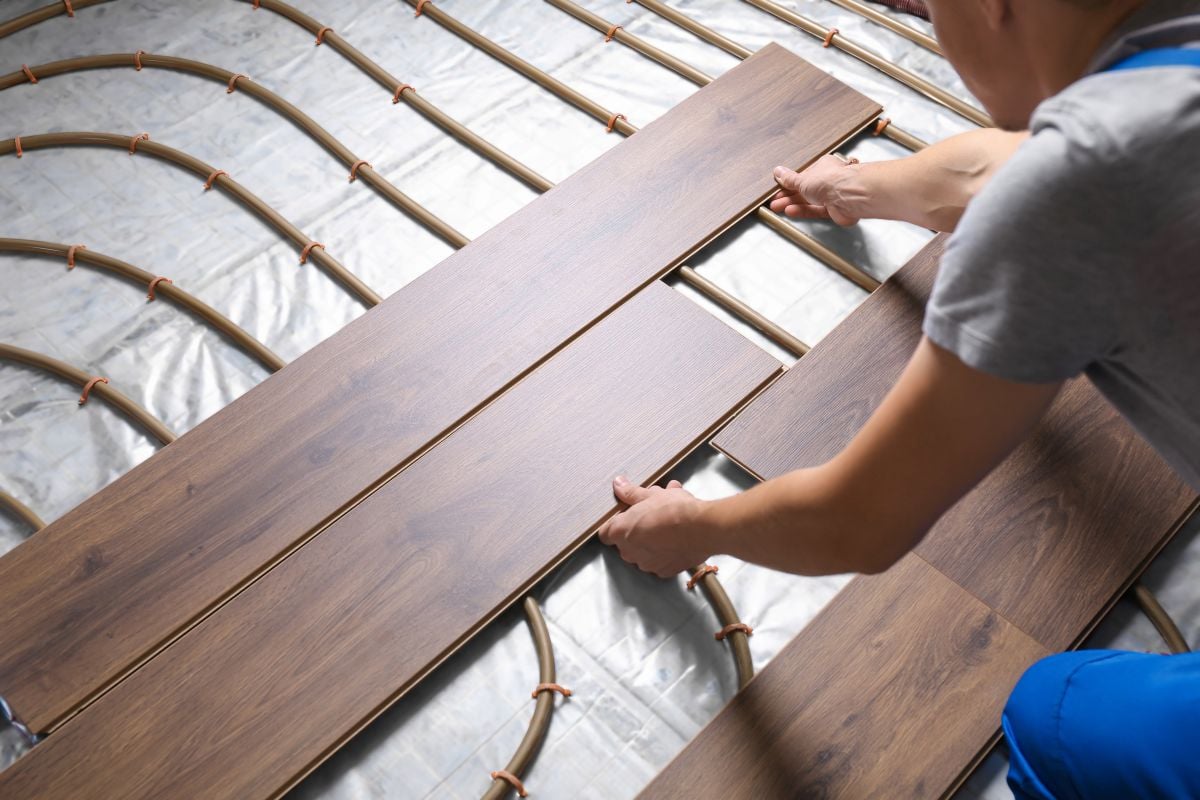
Hydronic floor heating circulates warm water through tubing installed beneath the floor, making it the most efficient and popular choice for whole-home heating. A boiler, water heater, or heat pump warms the water, which flows through a network of flexible PEX tubing to radiate heat across the floor. Hydronic systems cost more to install and are usually designed into new construction or major remodels, but they cost less to operate over large areas, which makes them the go-to for whole-house radiant heat. For a whole Minneapolis home, hydronic is typically the system of choice.
- How it works: Warm water flows through tubing under the floor.
- Best for: Whole-home heating and large areas.
- Heat source: A boiler, water heater, or heat pump.
2. Electric Floor Heating
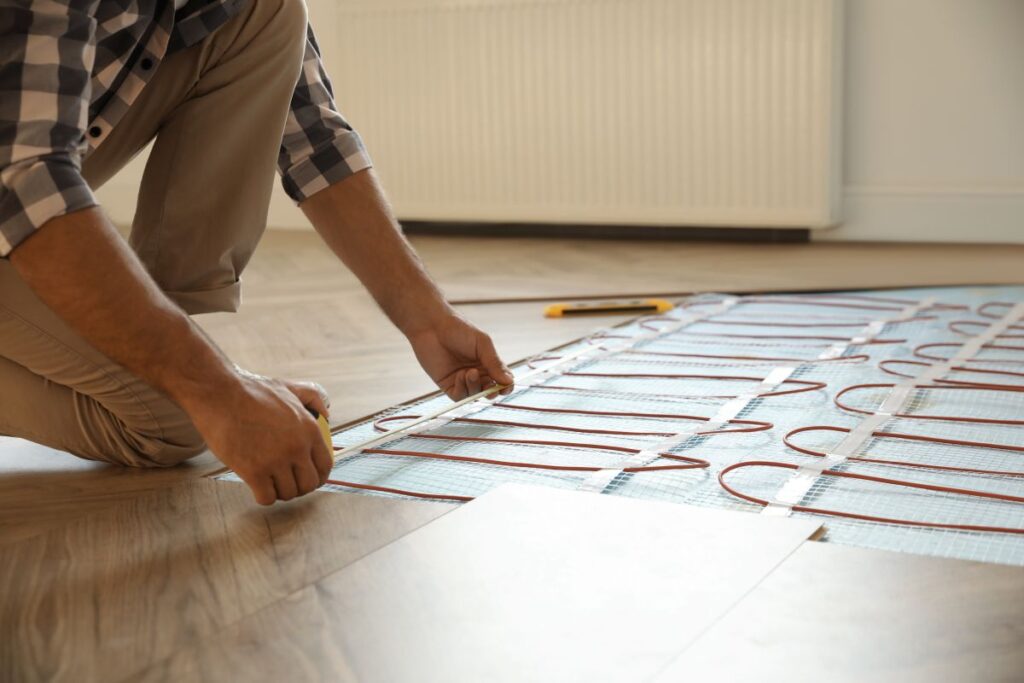
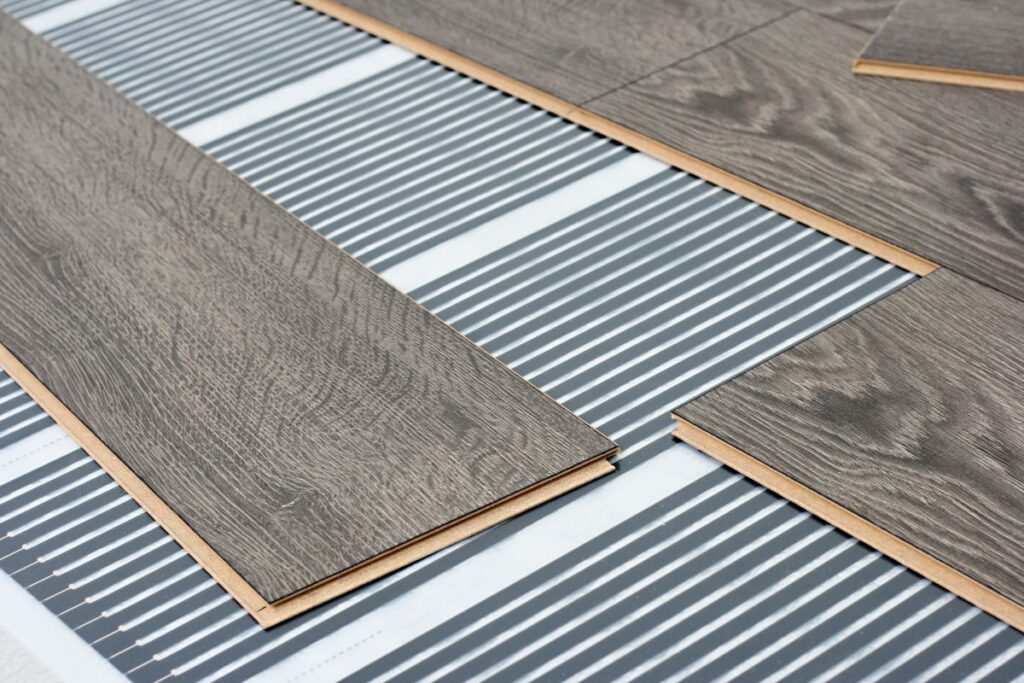
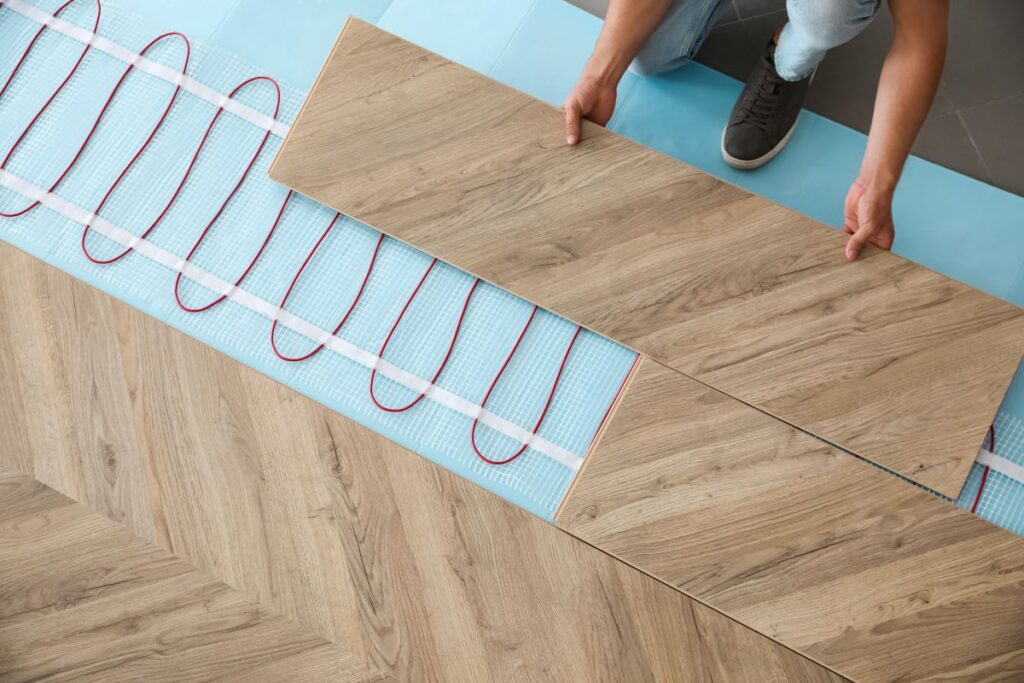
Electric floor heating uses heating cables or mats installed under the floor, making it the simplest and most affordable option for single rooms. Because it needs no boiler or water lines, electric radiant is the easiest type to retrofit into an existing home, which makes it a favorite for bathrooms, kitchens, and basement remodels where warm tile feels dramatically better. It costs less upfront than hydronic but more to run over large areas, so it works best as supplemental heat or for a single space rather than heating a whole house. For one cold room, electric is often the practical pick.
- How it works: Electric cables or mats warm the floor.
- Best for: Single rooms, bathrooms, and retrofits.
- Trade-off: Cheap to install, costlier to run at scale.
3. Air-Heated Floor Heating
Air-heated floor heating circulates warm air through channels beneath the floor, but it is rarely used in homes because air holds heat poorly. This is the least common of the three types, since air cannot carry as much heat as water or deliver it as efficiently as electric cables, which makes it impractical for most residential settings. It is occasionally paired with solar air heating systems, but for everyday home heating, hydronic and electric are the practical choices. Most homeowners comparing floor heating systems will be deciding between hydronic and electric rather than air.
- How it works: Warm air moves through under-floor channels.
- Rarely used: Air carries and delivers heat inefficiently.
- The practical pick: Hydronic or electric suits most homes.
What Floor Heating Systems Cost in 2026
Floor heating cost depends mainly on the type and the size of the area, so the figures below are planning ranges rather than quotes. A professional assessment is the only way to get an accurate price for your home.
Installed Price Ranges by Type
Floor heating systems typically cost $8 to $20 per square foot installed in 2026, with electric and hydronic falling at different points in that range. Electric radiant floors generally run $8 to $15 per square foot installed, which makes a small bathroom an affordable upgrade, while hydronic systems run roughly $7 to $20 per square foot and climb higher for whole-home installations. A whole-home hydronic system for a 1,500-to-2,000 square foot house commonly lands between $12,000 and $43,000 depending on the home and whether a heat source must be added. New construction is generally cheaper than retrofitting an existing floor.
- Electric: Roughly $8 to $15 per square foot installed.
- Hydronic: Roughly $7 to $20 per square foot installed.
- Whole-home hydronic: Often $12,000 to $43,000 total.
Why These Systems Suit Minnesota Homes
Hydronic floor heating fits naturally into Minnesota’s climate and housing, since hot-water heating is already common across the region. According to the American Council for an Energy-Efficient Economy, hot-water distribution systems that send heat from a boiler through radiators or baseboards are common in older homes in the Northeast and Midwest, and new air-to-water heat pumps can now feed those same systems with cleaner energy. That same hot-water approach powers hydronic floor heating, which is part of why radiant floors are a natural fit for cold-climate Minneapolis homes.
- Hot-water heritage: Water-based heating is common in the region.
- Heat pump ready: Air-to-water heat pumps can feed hydronic systems.
- Cold-climate fit: Radiant warmth suits long Minnesota winters.
Frequently Asked Questions
Homeowners considering floor heating systems ask these most often. Short answers follow.
How much do floor heating systems cost?
Floor heating systems typically cost $8 to $20 per square foot installed in 2026. Electric radiant runs about $8 to $15 per square foot and suits single rooms, while hydronic runs $7 to $20 and suits whole homes. A whole-home hydronic system often totals $12,000 to $43,000.
Which type of floor heating is best?
Hydronic is best for whole-home heating because it operates efficiently over large areas, while electric is best for single rooms and retrofits like bathrooms. Air-heated systems are rarely used in homes. Your choice depends on the area you want to heat and your existing setup.
Does floor heating cool a home too?
No, floor heating only provides heat, so a home with radiant floors still needs a separate cooling system for summer. Many homeowners pair radiant heat with a central air conditioner or heat pump to cool the house. A professional can help plan cooling alongside radiant heat.
Is radiant floor heating worth it?
For many homeowners, the even, draft-free comfort and improved air quality make radiant floor heating worth the higher installation cost, especially for whole-home hydronic in cold climates. The energy savings from eliminating duct losses add up over time. It is most cost-effective when designed into new construction.
Comfort, Cooling, and Keeping Your Whole Home Balanced
Floor heating systems deliver a kind of quiet, even warmth that is hard to match, and understanding the three types and their costs helps you decide whether heated floors fit your home and budget. One thing worth planning for is that radiant floors only heat, so a comfortable year-round home still needs a reliable cooling system and good controls to go with them. Hoffman Cooling & Heating has helped Minneapolis and Twin Cities families stay comfortable for 75 years, carrying Minnesota Mechanical Contractor Bond MB005011 and a 4.8 star average across roughly 2,300 Google reviews. Whether you need air conditioning to pair with radiant heat, a heat pump, or help keeping your home comfortable in every season, our technicians explain your options in plain language with no jargon and no pressure. For help keeping your home comfortable year-round, reach out to Hoffman any time.