


Articles
Furnace Blinking Red Light (What The Codes Mean & 7 Fixes)
A furnace blinking red light is not a malfunction by itself, it is your furnace’s control board reporting a diagnostic code that points to what is wrong. Modern furnaces monitor themselves and flash a specific pattern to signal everything from normal operation to a safety lockout, so reading that pattern turns a worrying blink into useful information. Several of the issues a code points to are simple fixes you can try yourself. This guide explains what the blinking light means, how to read it, and seven fixes to try in your Maple Grove home.
- Read the code: Learn how the blinking light reports a fault.
- Know the pattern: Understand what normal versus fault patterns look like.
- Try seven fixes: Work through the common solutions safely.
What a Blinking Red Light Means
A blinking red light on your furnace is a diagnostic signal from the control board, which monitors the system and flashes a coded pattern when it detects a fault or confirms normal operation. Reading it is the first step toward fixing the problem.
How To Read the Blinking Code
To read a furnace blinking light code, count the flashes between pauses and note whether they are fast or slow, then match that pattern to your furnace’s legend, printed inside the access panel or in the owner’s manual. A slow, steady blink often signals normal operation, while a repeating pattern, or a light that stays solid, usually points to a fault or a tripped safety control. Because the meaning varies by brand and model, always confirm the code against your furnace’s legend before acting. The code should never be ignored, since it means a component has tripped and the board often locks out to protect the system, and silencing it with a power cycle without fixing the cause only masks the problem.
- Count the flashes: Note the number and speed between pauses.
- Find the legend: It is printed inside the access panel or manual.
- Watch the pattern: Slow steady often means normal; rapid or solid means a fault.
- Do not ignore it: The code warns of a tripped control or component.
7 Fixes To Try for a Blinking Furnace Light
Once you have matched the code to your furnace’s legend, these seven fixes address the most common issues a blinking light points to. Work through them safely, and call a professional for anything involving gas or a code that keeps returning.
1. Record the Code First
Before anything else, count and write down the blink pattern so you can match it to the legend and track whether it changes. Note how many flashes occur between pauses and whether they are fast or slow, then compare that to the label inside your access panel. This record helps you decide which fix applies and gives a technician a precise starting point if you need one. Skipping it means guessing, so document the pattern first.
- Count carefully: Note flashes and speed between pauses.
- Match the legend: Compare against your furnace’s own label.
- Keep a record: It guides your fix and helps a technician.
2. Replace a Dirty Air Filter
Many blink codes trace back to restricted airflow, so a clogged filter is one of the first things to check and easiest to fix. Codes pointing to an open high-limit switch often result from a dirty filter choking airflow and overheating the furnace. Pull your filter and hold it to the light, and if light does not pass through, replace it. This clears a surprising share of airflow-related codes and should be your first hands-on fix.
- Check the filter: Hold it to the light for buildup.
- Replace if blocked: A clogged filter triggers limit codes.
- First hands-on fix: It clears many airflow-related faults.
3. Reset the Furnace
If the code indicates a lockout, a single power reset can clear a one-time fault. Turn the furnace off at the thermostat, switch off the power switch or breaker for about a minute, then restore power to let the control board restart and clear a temporary lockout. Give it a few minutes to run through startup. If the same code returns right after the reset, stop resetting and move to the other fixes or call a professional, since a repeating code signals a real problem.
- One reset: Power cycle to clear a one-time lockout.
- Wait for startup: Allow a few minutes for the sequence.
- Code returns? Stop: A repeating lockout needs more than a reset.
4. Check and Clean the Flame Sensor
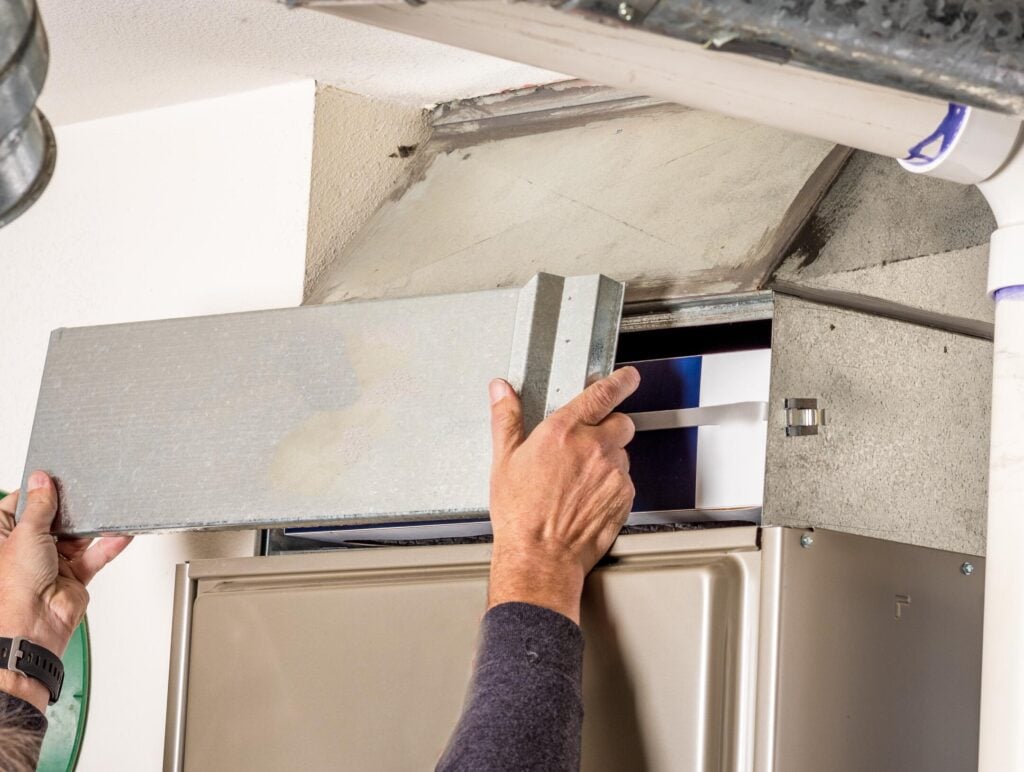
When the code points to an ignition or flame-sensing fault, a dirty flame sensor is a frequent, fixable cause. The sensor confirms the burners are lit, and when it is coated in soot it cannot detect the flame, so the board shuts off the gas and flashes a lockout code. With power and gas off, the rod can be gently cleaned with fine emery cloth. Because this involves the burner area, many homeowners prefer a technician handle it during a service visit.
- Ignition codes: A dirty flame sensor is a common trigger.
- Power and gas off: Required before touching the sensor.
- Gentle cleaning: Fine emery cloth on the rod only.
5. Clear Blocked Vents and the Condensate Line
Codes pointing to a pressure switch fault often mean the furnace cannot vent properly, so check the vents and drain. On high-efficiency furnaces, a blocked exhaust or intake vent, or a clogged condensate line, can trip the pressure switch and flash a code. Check that exterior vent pipes are clear of snow, ice, and debris, and look for standing water that signals a clogged drain. Clearing a blocked vent can resolve the code, while a persistent pressure switch fault needs professional diagnosis.
- Check the vents: Clear snow and debris from exterior pipes.
- Check the drain: Standing water points to a clogged condensate line.
- Persistent fault: A recurring pressure code needs a pro.
6. Confirm the Thermostat Setting
Some codes simply mean the furnace is not receiving a call for heat from the thermostat, so this is an easy, no-risk thing to rule out. Confirm the thermostat is set to heat and a few degrees above room temperature, and replace its batteries if it uses them. A thermostat issue occasionally explains a code that looks alarming but is really just reporting that no heat is being requested. Verify this before assuming a mechanical fault, since it costs nothing.
- Set to heat: Confirm the mode and temperature.
- Fresh batteries: Replace them if the display is dim.
- Rule it out: Some codes just mean no call for heat.
7. Call a Professional for Persistent Codes
When a code keeps returning after the safe fixes, or points to a control board, gas, or safety fault, it is time for a professional. A solid red light signaling control board failure, repeating ignition or pressure lockouts, and anything involving gas or the heat exchanger all call for a trained technician. According to ENERGY STAR, a professional maintenance visit should check the system’s controls and the full starting cycle to confirm the equipment starts, runs, and shuts off properly.
- Persistent codes: Repeating faults need professional diagnosis.
- Control or gas faults: Never DIY these.
- Professional check: A technician verifies the full control sequence.
Frequently Asked Questions
Homeowners facing a furnace blinking red light ask these most often. Short answers follow.
What does a blinking red light on my furnace mean?
A blinking red light is a diagnostic code from the furnace control board that reports the system’s status or a specific fault. You count the flashes between pauses and match the pattern to the legend inside the access panel. The exact meaning depends on your furnace’s brand and model.
Does a blinking furnace light always mean a problem?
No, on many furnaces a slow, steady blink actually indicates normal operation. A rapid repeating pattern or a light that stays solid is what usually signals a fault or a control failure. Always check your furnace’s legend to interpret the specific pattern.
Can I fix a blinking light code myself?
You can safely handle simple causes like replacing a dirty filter, resetting the furnace once, clearing blocked vents, or checking the thermostat. Codes pointing to gas, ignition, or control board faults, or any code that keeps returning, need a licensed technician. When in doubt, call a professional.
Where is the code legend on my furnace?
The legend that translates each blink pattern is usually printed on a label inside the furnace’s access panel, and it is also in the owner’s manual. This legend is specific to your brand and model, so it is the most reliable guide. If you cannot find it, a technician can identify the code for you.
Decode the Light, Then Call In Backup if Needed
A blinking red light is your furnace trying to tell you something, and matching the pattern to your unit’s legend often points you straight to a simple fix like a clogged filter or a thermostat set wrong. When the code keeps coming back, or points to gas, ignition, or the control board, that is the moment to bring in a pro rather than keep guessing. The team at Hoffman Cooling & Heating has spent 75 years diagnosing Minnesota furnaces, and as a licensed and bonded Minnesota contractor serving Maple Grove and the Twin Cities, we read these codes every day and explain them in plain language, without the pressure. When a blinking light has you stumped, reach out to Hoffman and we will track down the real cause.