


Articles
Furnace Control Board (4 Failure Signs & Replacement Cost)
The furnace control board is the brain of your heating system, the circuit board that sequences every step from ignition to blower operation and monitors the safety controls. When it starts to fail, the whole furnace behaves erratically or stops working, and because the board also runs the diagnostic light, it often signals its own trouble through a blinking code. Knowing the signs of failure, how to read those codes, and what replacement costs helps you decide what to do. This guide covers four failure signs, the diagnostic light codes by brand, and 2026 replacement costs for your Lakeville home.
- Spot failure early: Recognize the four signs of a failing board.
- Read the codes: See how major brands signal faults differently.
- Know the cost: Understand 2026 replacement pricing.
What a Furnace Control Board Does
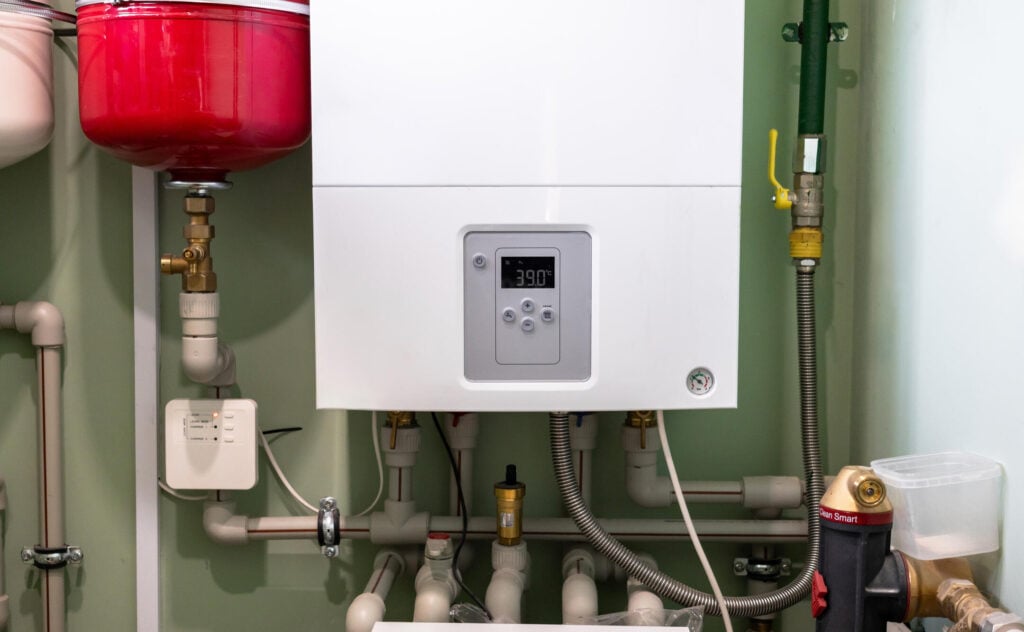
The furnace control board, sometimes called the motherboard, is the central circuit board that manages and sequences every function of your furnace. Understanding its role makes the signs of failure easier to recognize.
The Brain of the Furnace
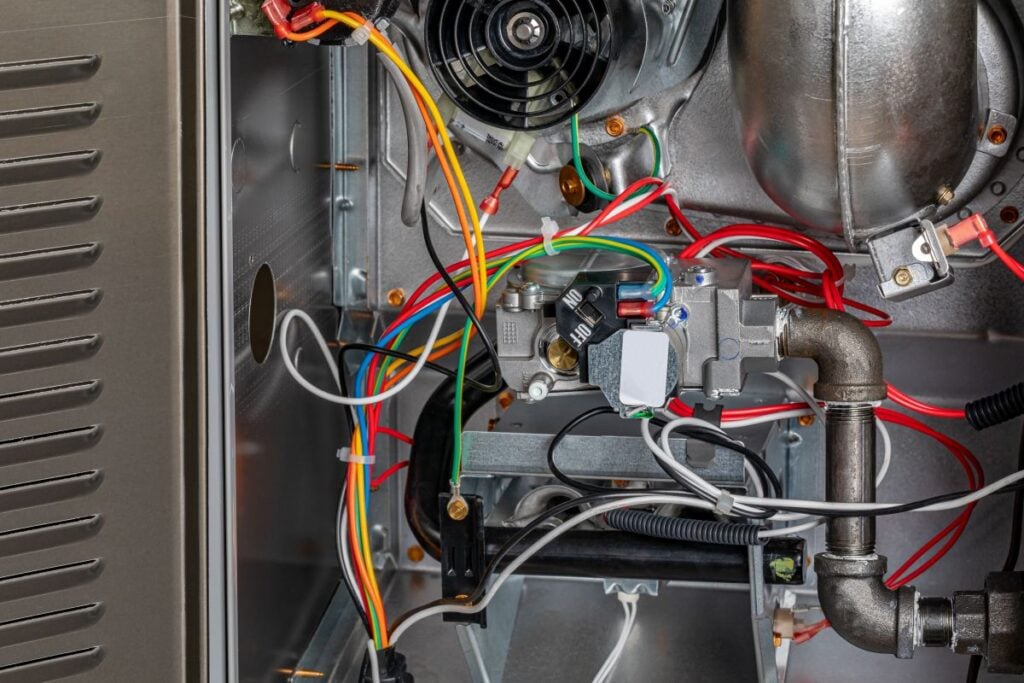
The control board coordinates the entire heating cycle, telling each component when to act. When your thermostat calls for heat, the board starts the inducer motor, triggers ignition, opens the gas valve, and times the blower in sequence. It also monitors safety devices like the limit and pressure switches, shutting the system down and flashing a code if something is wrong. Because it governs everything, a failing board can disrupt any part of the cycle, which is why its symptoms look like so many different problems.
- Sequences the cycle: It times ignition, gas, and blower operation.
- Monitors safety: It watches the limit and pressure switches.
- Signals faults: It flashes a diagnostic code when it detects trouble.
How To Read Control Board Light Codes by Brand
The control board’s diagnostic LED reports status and faults through a blinking pattern, but each brand uses its own system, so the same blinks can mean different things. Always confirm any code against the legend printed inside your furnace’s access panel.
Diagnostic Codes Differ by Manufacturer
To read a control board code, count the flashes between pauses and match the pattern to your furnace’s legend, since the meaning varies by brand and model. A slow, steady blink usually indicates normal operation, while a repeating pattern or a solid light points to a fault or a tripped safety control. The brands below each handle their diagnostic lights differently, so the same number of blinks can mean one thing on a Carrier and something else on a Goodman. Your unit’s legend, printed inside the access panel, is always the final word.
- Carrier and Bryant: Flash a two-digit status code, where short flashes are the first digit and long flashes the second; communicating Infinity and Evolution systems show the code on the wall control.
- Goodman and Amana: Use a single red LED on the board, where a solid red light typically signals a control board failure and many models store recent codes.
- Trane and American Standard: Use a red LED where a slow, steady blink is normal and a solid red light indicates a control failure.
- Lennox: Use red and green LEDs together, where both blinking slowly signals normal operation and other patterns indicate specific faults.
- Rheem and Ruud: Use a status LED, with some higher-end models adding a numeric display that shows the fault as digits.
4 Signs of a Failing Furnace Control Board
A failing control board produces symptoms that can mimic other furnace problems, so these four signs are worth knowing. Because diagnosis can be tricky, confirming a board failure usually calls for a technician.
1. The Furnace Won’t Turn On at All
A completely unresponsive furnace, with no ignition, no blower, and no response to the thermostat, can indicate a dead control board. Since the board distributes power and commands to every component, a failed board can leave the whole system lifeless even though power reaches the furnace. Before blaming the board, confirm the thermostat, power switch, and breaker are on, since those are simpler causes. If power is confirmed and the furnace still shows no sign of life, a failed control board is a strong suspect a technician can verify.
- No response: Nothing happens when the thermostat calls for heat.
- Rule out power: Check the thermostat, switch, and breaker first.
- Then suspect the board: A dead board can leave the system lifeless.
2. Erratic or Intermittent Operation
A furnace that behaves unpredictably, short cycling, starting at random, or running the blower constantly, often points to a control board problem. When the board’s circuits begin to fail, the signals it sends to components become unreliable, producing erratic behavior that comes and goes. You might notice the furnace starting without a call for heat, shutting off mid-cycle, or a blower that will not stop. This hard-to-pin-down behavior is a classic sign of a board that is degrading rather than one that has failed outright.
- Unpredictable cycling: Random starts, stops, or constant blower.
- Degrading circuits: Failing components send unreliable signals.
- Comes and goes: Intermittent faults point to the board.
3. A Diagnostic Code or Burning Smell
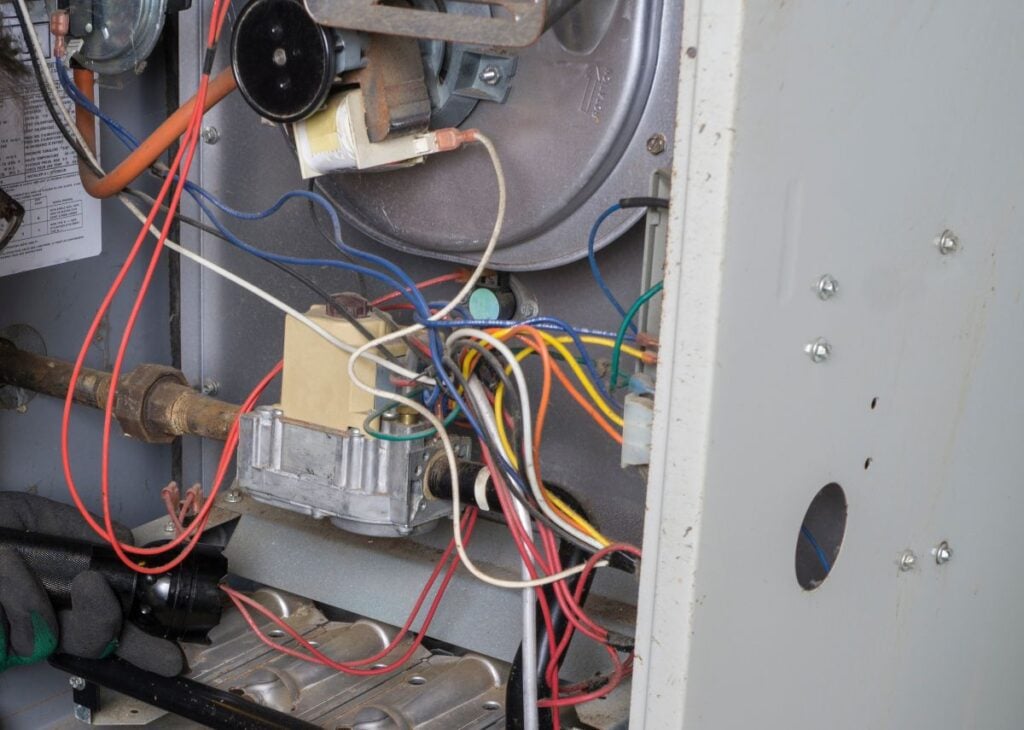
The board often announces its own failure, either through a diagnostic code or, in serious cases, a burnt electrical smell. A solid light on many boards specifically signals a control board failure, so checking the diagnostic LED against your legend can point right at it. You may also notice a faint burning or electrical odor near the furnace, or visible scorch marks on the board, which indicate electrical damage. Any burning smell warrants shutting the furnace off and calling a technician promptly.
- Fault code: A solid light often signals board failure.
- Burning odor: An electrical smell indicates board damage.
- Visible scorching: Burn marks confirm a failed board.
4. Inconsistent Component Behavior
When individual parts work sometimes but not others, the common link is often the board that commands them all. You might find the igniter fires on some cycles but not others, the blower runs at the wrong times, or the inducer motor behaves inconsistently, even though each part tests fine on its own. This happens because the board is sending intermittent or incorrect signals rather than the parts themselves failing. A technician diagnoses it by confirming the components are good and tracing the fault back to the board.
- Parts work intermittently: Components act up without failing themselves.
- The common link: The board commands them all.
- Professional diagnosis: A tech rules out the parts first.
Furnace Control Board Replacement Cost in 2026
Replacing a control board is a common repair, and the cost depends mainly on the board type and your furnace. The figures below are planning ranges, not quotes.
What Replacement Costs
A furnace control board replacement typically costs between $300 and $700 installed in 2026, with the part running roughly $50 to $500 and labor adding $150 to $400. Universal boards cost less than brand-specific OEM boards, though OEM boards ensure full compatibility on high-efficiency systems. A control board generally lasts 10 to 15 years, so on a furnace older than 15 years, a new board may be a short-term fix. According to ENERGY STAR, if your furnace is more than 15 years old, it is worth considering replacing it rather than investing in major repairs.
- Typical range: Roughly $300 to $700 installed.
- OEM vs. universal: OEM boards cost more but ensure compatibility.
- Weigh the age: On an older furnace, weigh repair against replacement.
Frequently Asked Questions
Homeowners dealing with a furnace control board ask these most often. Short answers follow.
How much does a furnace control board cost to replace?
A furnace control board replacement typically costs $300 to $700 installed in 2026, with the part at roughly $50 to $500 and labor at $150 to $400. High-efficiency and communicating boards cost more, as do emergency after-hours calls. A diagnostic fee may apply separately.
What causes a furnace control board to fail?
Control boards commonly fail from age, power surges, overheating, moisture or corrosion, and loose electrical connections that stress the circuits. A nearby lightning strike or an electrical surge can also damage a board instantly. Most boards last 10 to 15 years before age-related failure.
Can I replace a furnace control board myself?
Because the job involves line-voltage wiring, gas-furnace safety sequencing, and correct board configuration, it is best left to a licensed technician. An incorrectly wired or configured board can create a safety hazard or damage other components. Professional replacement also ensures the new board is set up correctly for your system.
Is it worth replacing the control board or the whole furnace?
If your furnace is under 15 years old and otherwise sound, replacing just the board is usually the economical choice. On a furnace older than 15 years, where other components are also aging, full replacement often makes more sense. A technician can help you weigh the numbers.
When Your Control Board Acts Up, We Can Help
A failing control board is one of the trickier furnace problems to pin down, since its symptoms imitate so many other issues, which is exactly why a proper diagnosis matters before you spend on parts. Whether it is an unresponsive furnace, erratic cycling, or a diagnostic code you cannot decipher, getting it correctly identified saves you from replacing parts that were never the problem. The team at Hoffman Cooling & Heating has spent 75 years keeping Minnesota furnaces running, and as a licensed and bonded Minnesota contractor serving Lakeville and the surrounding Twin Cities, we diagnose control board faults accurately and explain your options in plain language, without the pressure. When your furnace is acting erratically or flashing a code, reach out to Hoffman and we will find out what is really going on.