Articles
How Often To Change Furnace Filter (5 Signs It’s Time)
How often to change a furnace filter depends on the filter’s thickness and your household, but most homeowners should replace a standard one-inch filter every one to three months. Thicker filters last longer, while pets, allergies, and heavy winter use shorten the interval. Staying on schedule protects your furnace, keeps energy bills down, and improves the air you breathe, yet it is one of the easiest maintenance tasks to forget. This guide explains how often to change your furnace filter by type, plus five clear signs it is time to swap it, for your St. Louis Park home.
- The schedule: Learn replacement intervals by filter thickness.
- What shortens it: See how pets, allergies, and use affect timing.
- Five signs: Recognize when a filter needs changing now.
How Often Should You Change a Furnace Filter?
How often you change a furnace filter depends mostly on its thickness, with thicker filters lasting longer, along with factors like pets and allergies. The intervals below are general guidance, so checking your filter regularly matters more than any fixed date.
Replacement Schedule by Filter Type
A furnace filter’s replacement interval scales with its thickness, from monthly for thin filters to up to a year for thick media filters. A standard one-inch or two-inch pleated filter generally lasts one to three months, a four-inch filter runs three to six months, and a five-inch media filter can go six to twelve months. These are starting points, since real-world conditions change how fast a filter loads up. The best habit is to check your filter monthly and let its actual condition, not just the calendar, tell you when to replace it.
- One to two inch: Replace every one to three months.
- Four inch: Replace every three to six months.
- Five inch media: Replace every six to twelve months.
- Check monthly: Let condition, not just the date, decide.
What Makes You Change It More Often
Certain households need to change furnace filters more frequently, sometimes monthly, because their air carries more particles. According to ENERGY STAR, you should check your filter every month, especially during heavy-use winter and summer months, change it if it looks dirty, and replace it at a minimum every three months, since a dirty filter slows airflow and makes the system work harder. Pets, allergy or asthma sufferers in the home, frequent use during a long Minnesota winter, and ongoing remodeling dust all load a filter faster and call for more frequent changes.
- Pets: Dander and hair clog filters faster.
- Allergies: More frequent changes improve indoor air.
- Heavy use: Long Minnesota winters load filters quickly.
5 Signs It’s Time To Change Your Furnace Filter
Beyond the calendar, your furnace and your home give clear signals when a filter is overdue. Watch for these five signs between scheduled checks.
1. The Filter Looks Dirty
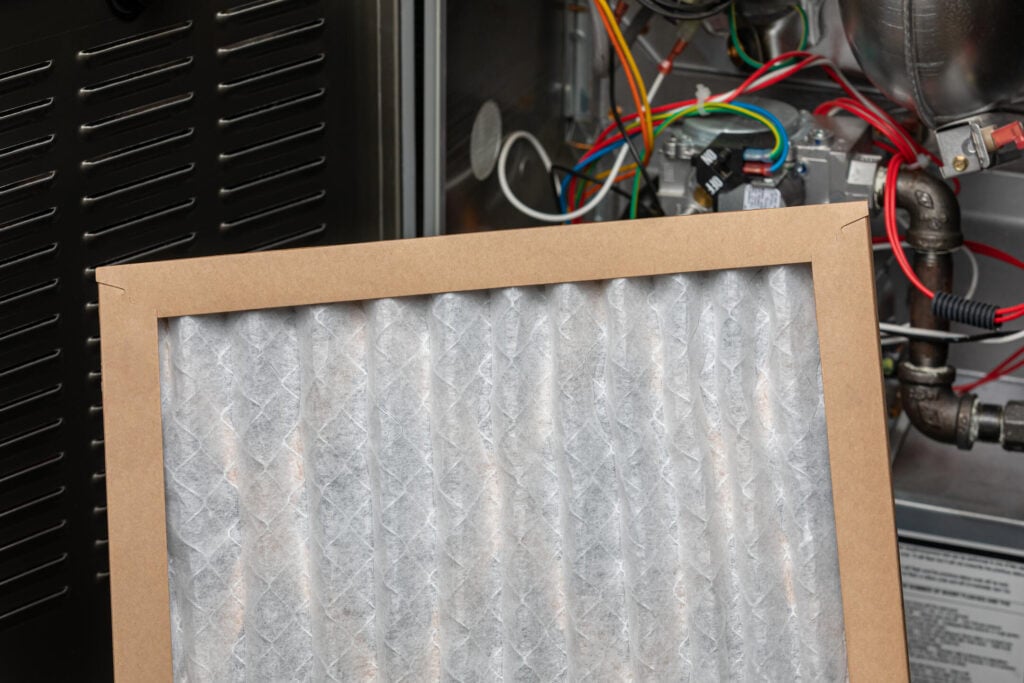
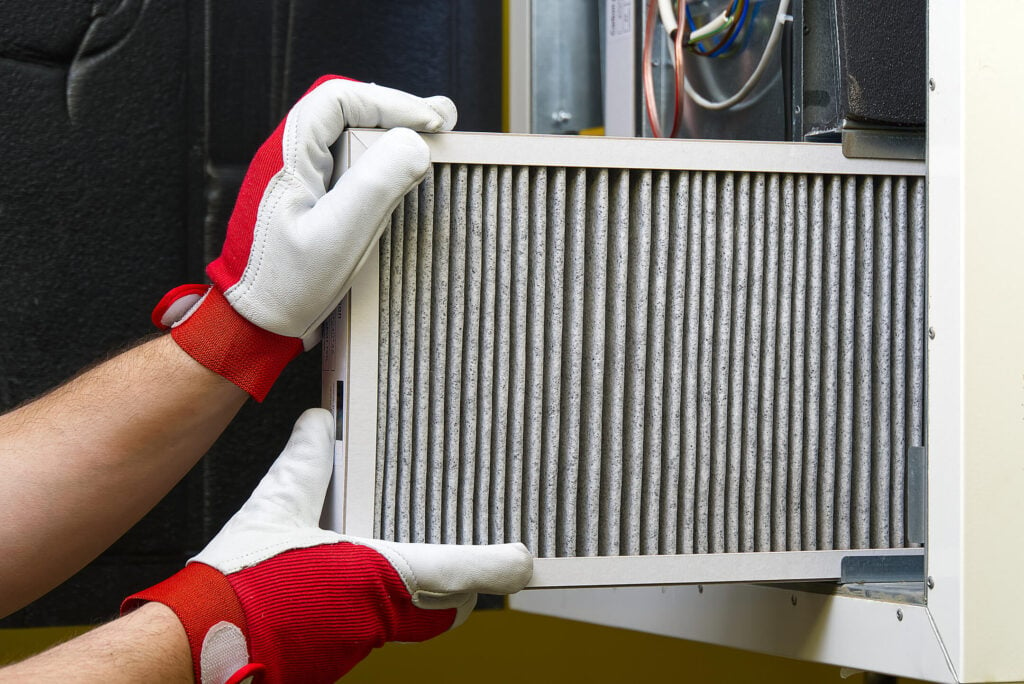
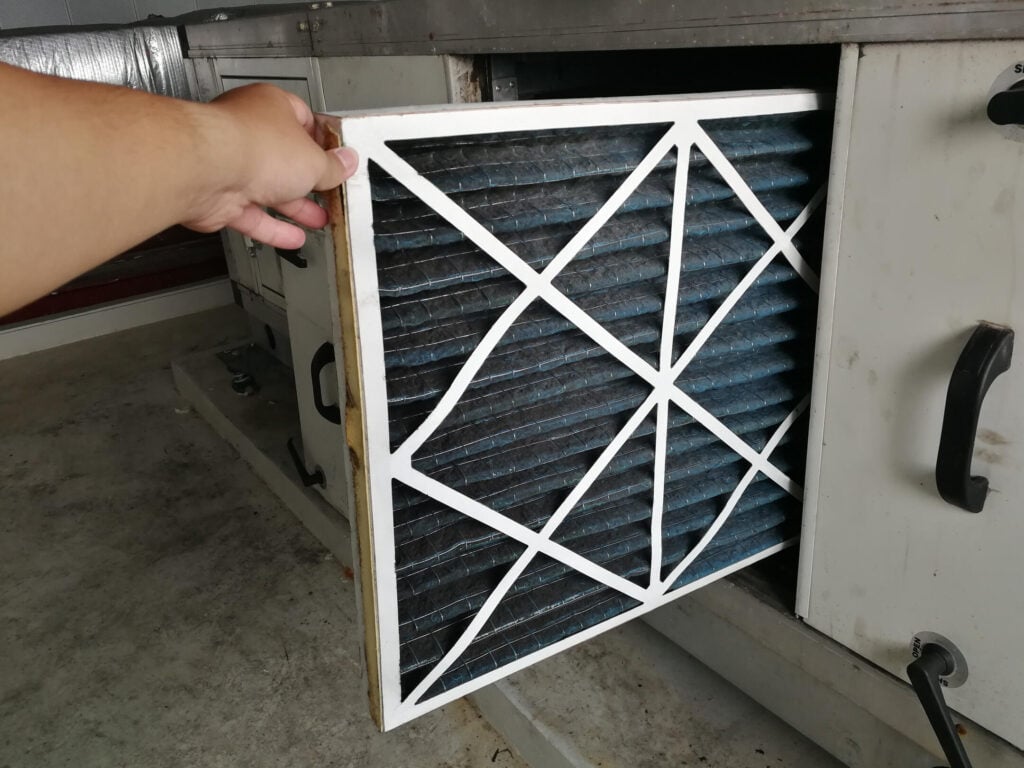
The most reliable sign is the simplest: pull the filter out and look at it against a light source. If you cannot see light passing through the filter material, or it is visibly coated in gray dust, hair, and debris, it is time to replace it. This visual check takes seconds and is the single best way to judge a filter’s condition, since households and seasons vary so much. Make a habit of pulling the filter monthly and holding it up to a window or bulb to decide.
- Hold it to the light: No light passing through means replace it.
- Look for buildup: Gray dust and hair signal a full filter.
- Check monthly: A quick look beats guessing by the calendar.
2. More Dust Around Your Home
When a filter is saturated, it stops capturing particles effectively, so you notice more dust settling on furniture and surfaces. If you find yourself dusting more often than usual, or see a faster buildup on shelves, electronics, and sills, your filter may no longer be doing its job. A clogged filter lets particles recirculate through the home instead of trapping them. Noticing a jump in household dust is a practical cue to check and likely change the filter.
- Faster buildup: Dust returns quickly after cleaning.
- Recirculating particles: A full filter stops trapping dust.
- Everyday cue: More dusting often means an overdue filter.
3. Reduced Airflow From the Vents
Weak or reduced airflow from your registers is a common sign the filter is clogged and restricting the air your furnace can move. As a filter fills with debris, it chokes the airflow, so you feel less warm air coming from the vents and some rooms take longer to heat. The furnace then runs longer to compensate, working harder than it should. If airflow feels weaker than usual, checking the filter is the first and easiest thing to rule out.
- Weaker airflow: Less warm air reaches the vents.
- Slower heating: Rooms take longer to warm up.
- First check: Rule out the filter before anything else.
4. Higher Energy Bills
A clogged furnace filter forces the system to work harder and run longer, which shows up as higher heating bills. When airflow is restricted, the furnace consumes more energy to deliver the same warmth, quietly raising your monthly cost. The U.S. Department of Energy notes that keeping filters and airflow clear helps a system run efficiently, so a dirty filter works directly against your bill. If your heating costs climb without a change in weather or habits, an overdue filter is one of the first things to check.
- Longer run times: Restricted airflow makes the furnace work harder.
- Rising costs: Higher bills without heavier use point to the filter.
- Easy savings: A clean filter helps the system run efficiently.
5. Worsening Allergies or Musty Odors
Increased allergy symptoms or a musty, stale smell when the furnace runs can signal a filter that is no longer capturing particles. A saturated filter lets dust, pollen, and pet dander circulate freely, which can aggravate allergies and asthma for sensitive household members. A persistent musty odor when the heat kicks on can also point to a dirty filter or buildup in the system. If the air feels stuffier or symptoms worsen, a fresh filter is an easy first step toward cleaner air.
- More symptoms: Circulating allergens worsen allergy flare-ups.
- Musty smell: Stale odors can trace to a dirty filter.
- Cleaner air: A fresh filter helps capture particles again.
Frequently Asked Questions
Homeowners wondering how often to change a furnace filter ask these most often. Short answers follow.
How often should I change my furnace filter?
Most homeowners should change a standard one-inch filter every one to three months, a four-inch filter every three to six months, and a five-inch media filter every six to twelve months. Check it monthly and replace it whenever it looks dirty. Pets, allergies, and heavy use call for more frequent changes.
Does changing the filter more often really help?
Yes, a clean filter improves airflow, lowers energy use, protects your furnace from wear, and helps keep indoor air cleaner. A clogged filter makes the system work harder and can lead to early failure. Checking monthly is the simplest way to stay ahead of problems.
What happens if I never change my furnace filter?
A neglected filter restricts airflow, raises energy bills, circulates more dust, and can cause the furnace to overheat and shut down on its safety limit. Over time it shortens the equipment’s lifespan. Regular changes prevent these avoidable problems.
Do thicker filters really last longer?
Yes, thicker filters have more surface area to capture particles, so a four-inch or five-inch media filter lasts longer than a thin one-inch filter. Always check the manufacturer’s guidance and your filter’s actual condition. Thickness must also match what your system is designed to accept.
A Clean Filter Is the Easiest Win for Your Furnace
Changing your furnace filter on schedule is one of the simplest, cheapest things you can do to keep your system running efficiently and your air clean, so a monthly check and a fresh filter every one to three months pays off all winter. Use the signs above as your guide between checks, and remember that a filter is only one part of a healthy system that also benefits from an annual professional tune-up. Hoffman Cooling & Heating has kept Minnesota homes comfortable for 75 years. When you want your heating system checked, tuned, or simply running its best, reach out to Hoffman any time.