Articles
Heat Not Working In House (5 Causes & What To Check First)
Heat not working in house is one of the most stressful problems a Minnesota homeowner can face, but the first move is to work calmly through a few simple checks, because the most common causes are minor and quick to rule out before you call for service. A wrong thermostat setting, a tripped breaker, or a clogged filter is behind a surprising share of no-heat situations, and each takes only a minute to check. Working through the likely causes in order, from simplest to most serious, helps you fix the easy ones yourself and describe the problem clearly if you do need a technician. This guide covers five common causes and exactly what to check first in your Roseville home.
- Check the basics first: Start with the quick, safe checks that solve many problems.
- Work in order: Move from simplest causes to those needing a pro.
- Know when to call: Recognize the issues that require a technician.
What To Check First When the Heating System Stops Working
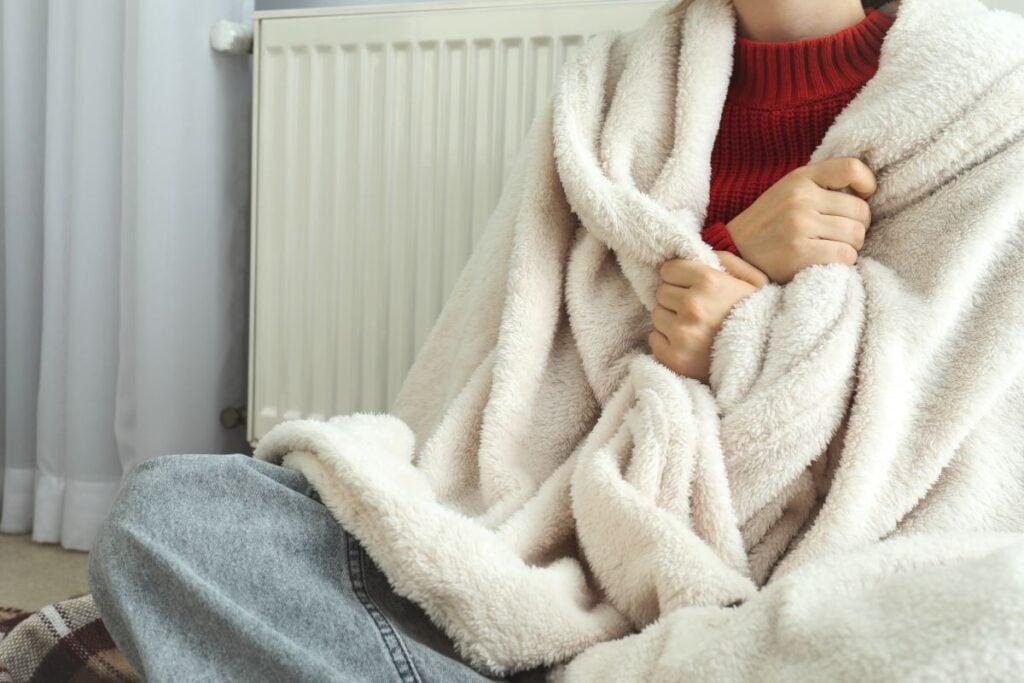
Before assuming the worst, confirm there is no safety hazard and then run through the simplest checks in order. Most no-heat situations trace back to something minor that takes only a few minutes to find.
Start With Safety, Then the Simple Checks
The moment your heat stops, make sure there is no gas smell or sounding carbon monoxide alarm before you troubleshoot anything. If you smell gas or a CO alarm is going off, get everyone outside and call for help from outside the home rather than investigating. Once you have confirmed there is no hazard, the simple checks below resolve most no-heat situations, and none of them requires tools. Working methodically from the easiest cause to the most serious keeps a stressful moment from becoming a bigger problem.
- Rule out hazards first: A gas smell or CO alarm means leave immediately.
- No hazard? Troubleshoot: Work calmly through the checks in order.
- Start simple: Most no-heat calls trace to a minor cause.
- Know your limits: Stop and call a pro for gas or electrical issues.
5 Causes of Heat Not Working and What To Check
Each cause below includes what to check and whether you can safely fix it yourself. They are ordered from the most common and easiest to the more serious.
1. Thermostat Settings or Batteries
The thermostat is the first and most common thing to check, since a wrong setting or dead batteries causes many no-heat situations. Confirm it is set to heat rather than cool or off, and raise the temperature several degrees above the current room reading to make sure it is calling for heat. If the display is blank or dim, replace the batteries, since dead batteries are an easily missed cause. Give the system a minute to respond after each change before deciding the thermostat is not the problem.
- Set to heat: Confirm the mode and a temperature above the room’s.
- Replace batteries: A blank screen often means dead batteries.
- Wait a moment: Give the system time to respond.
2. A Tripped Breaker or Power Switch
If the system seems completely dead, a tripped breaker or an off power switch is a fast and common cause to check next. Go to your electrical panel and look for a furnace breaker that has moved to the middle or off position, and reset it once by flipping it fully off and back on. Also find the furnace power switch, which looks like a standard light switch on or near the unit, and confirm it is on. If the breaker trips again right away, stop and call a technician, since a repeated trip points to an electrical fault.
- Check the breaker: Reset a tripped furnace breaker once.
- Find the switch: Confirm the furnace power switch is on.
- Repeated trips? Call: A breaker that keeps tripping needs a pro.
3. A Clogged Air Filter
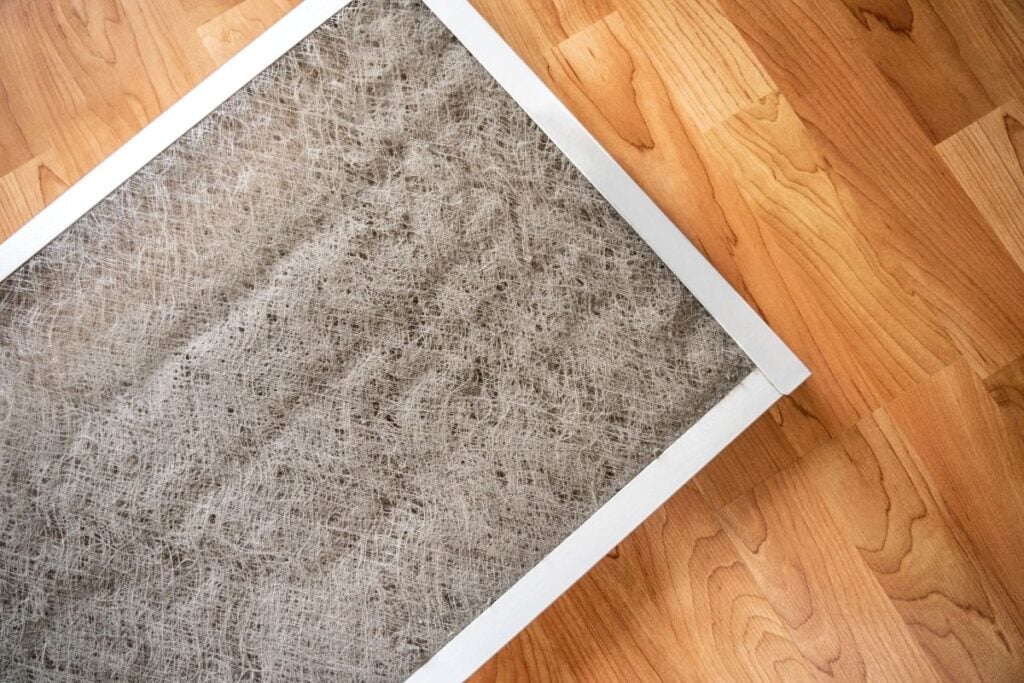
Clogged air filters are one of the most common causes of restricted airflow and short cycling, since they can choke airflow enough to make the furnace overheat and shut down on a safety limit. Pull the filter out and hold it up to the light, and if light does not pass through, replace it with the correct size. Check air filters as part of regular maintenance and change or clean them every one to three months. According to ENERGY STAR, dirt and neglect are the top causes of heating and cooling system failure and inefficiency, which is why a clean filter matters so much and routine maintenance helps prevent unexpected heating system breakdowns. Swapping dirty air filters can bring a shut-down furnace back to life within minutes.
- Check for light: If none passes through, replace the filter.
- Use the right size: Match the filter to your system.
- Prevents shutdowns: Clean airflow avoids overheating trips with regular maintenance.
4. A Loose Furnace Panel
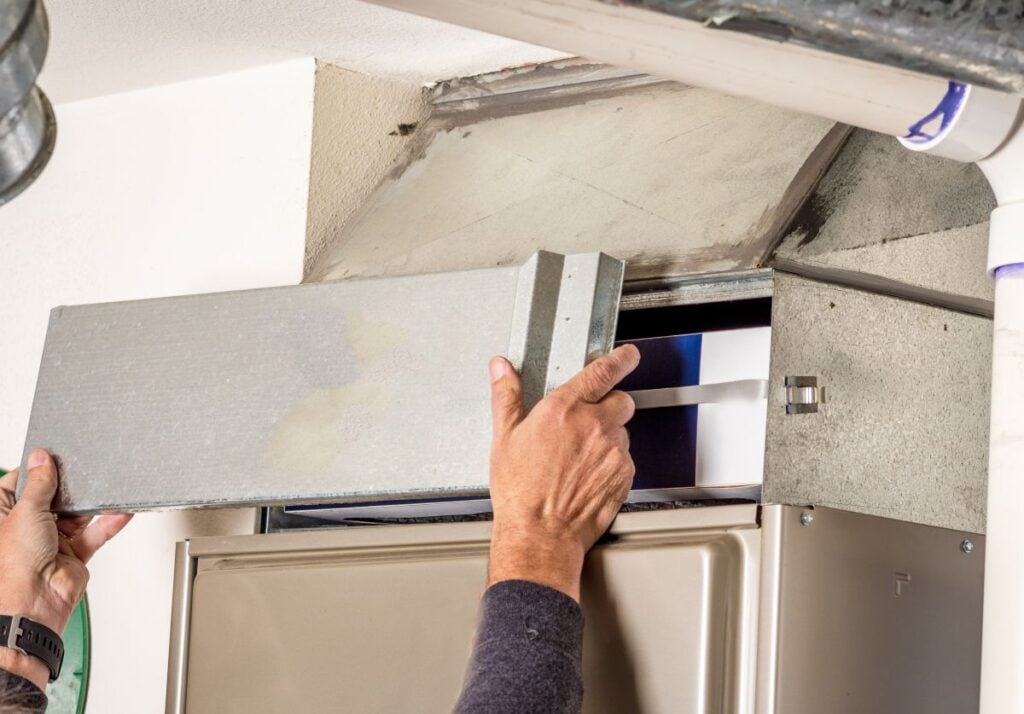
Many furnaces will not run at all if the access panel covering the blower is not fully seated, thanks to a built-in safety switch. Check that the front panel is closed and latched properly, since it can be left loose after a filter change or other work. The safety switch behind it stops the furnace from operating with the panel open, which is a common reason a furnace suddenly will not start after someone has been near it. Press the panel firmly into place until it seats fully, then give the furnace a minute to start.
- Check the panel: Make sure the blower cover is fully closed.
- Seat it firmly: A loose panel trips the safety cutoff.
- Common after service: Panels often loosen during a filter change.
5. Ignition, Gas, or Mechanical Problems
If the basics all check out and you still have no heat, the cause is likely an ignition, gas supply, or internal mechanical issue that needs a professional. A failed igniter or flame sensor, a closed gas valve, a blower motor problem, or a tripped safety limit can all stop a furnace from producing heat. Confirm your gas supply is on by checking whether other gas appliances work, but never attempt gas or internal electrical repairs yourself. At this point, a licensed technician is the safe and correct next step.
- Check the gas: See whether other gas appliances are working.
- Leave repairs to a pro: Ignition and gas work is not DIY.
- Call a technician: Persistent no-heat needs professional diagnosis.
Frequently Asked Questions
Homeowners with no heat ask these most often. Short answers follow.
Why is my heat not working all of a sudden?
A sudden loss of heat usually traces to a thermostat setting, dead thermostat batteries, a tripped breaker, or a clogged filter. Start with those quick checks before assuming a major problem. If the basics are fine, the cause is likely ignition, gas, or a mechanical fault needing a technician.
What should I check first when my house won’t heat?
Check the thermostat first, confirming it is set to heat and above room temperature with fresh batteries, then check the furnace breaker and power switch. Next, check the air filter and that the furnace panel is fully closed. These basics resolve many no-heat situations. Also make sure supply registers and return grilles are free of blocked vents, since that can cause uneven heating and cold spots.
When should I call a professional for no heat?
Call a pro if you smell gas or hear a CO alarm, if the breaker keeps tripping, or if the basic checks do not restore heat. Anything involving gas, ignition components, or internal electrical parts requires a licensed technician. In deep cold, call sooner to protect your pipes.
Can a dirty filter stop my furnace from heating?
Yes, a severely clogged filter can restrict airflow enough to make the furnace overheat and shut off on a safety limit. Replacing the filter often restores heat within minutes. Checking the filter is one of the easiest and most effective no-heat fixes.
No Heat and Stuck? We Are Here to Help
If you have worked through these checks and your house is still cold, the problem is beyond a quick fix, and a Minnesota winter does not give you long to sort it out. Hoffman Cooling & Heating has kept Minnesota homes warm for 75 years, carrying Minnesota Mechanical Contractor Bond MB005011 and a 4.8 star average across roughly 2,300 Google reviews from Roseville and across the Twin Cities. We answer with a real person, get a qualified technician to your door quickly, and find the real cause without jargon or pressure. When the simple checks do not bring your heat back, reach out to Hoffman and we will get your home warm again.