Articles
Furnace Parts (5 Key Components & What They Do)
Understanding the key furnace parts helps you recognize what your heating system is doing, spot trouble early, and have a clearer conversation with a technician when something goes wrong. A gas furnace relies on several components working together in sequence, from igniting the burner to pushing warm air through your home, and knowing each one makes a cold-weather breakdown far less stressful. Most Minnesota homeowners rely on these exact parts every winter to stay warm. This guide breaks down five key furnace components, what each does, and the warning signs to watch for in your Maplewood home.
- Core components: Learn the five parts that make your furnace work.
- What each does: Understand the role each plays in heating your home.
- Warning signs: Recognize when a part needs professional attention.
How Furnace Parts Work Together
A furnace heats your home through a coordinated sequence, with each part handling one stage of turning fuel into warm, circulating air. Understanding that sequence makes each individual component easier to follow.
The Heating Sequence
A furnace produces heat in a chain of steps, where the thermostat calls for heat, the burner ignites, the heat exchanger warms, and the blower circulates the air. When your thermostat signals that the home needs warmth, the ignition system lights the gas burner, which creates combustion inside the heat exchanger. The heat exchanger warms up while safely containing the combustion gases, and the blower motor then pushes household air across it and out through your ducts. This gas-fired sequence is what heats most American homes. According to the U.S. Energy Information Administration, natural gas remains the most common heating fuel, serving as the main source of heat in 47 percent of U.S. homes. Each part depends on the others, so a problem with one often shows up as a symptom somewhere else.
- Thermostat calls: The sequence starts when heat is requested.
- Burner ignites: The ignition system lights the gas burner.
- Heat exchanger warms: It heats air while containing combustion gases.
- Blower circulates: The blower pushes warm air through the ducts.
5 Key Furnace Replacement Parts and What They Do
Each component below plays a distinct role, and knowing what each does helps you understand both how your furnace works and what can go wrong. Because many furnace parts are model-specific, match the exact model, number, and part number when comparing furnace replacement parts and related products. These are the five parts that matter most, and the same OEM selection basics apply whether you have a gas or electric furnace.
1. The Burner
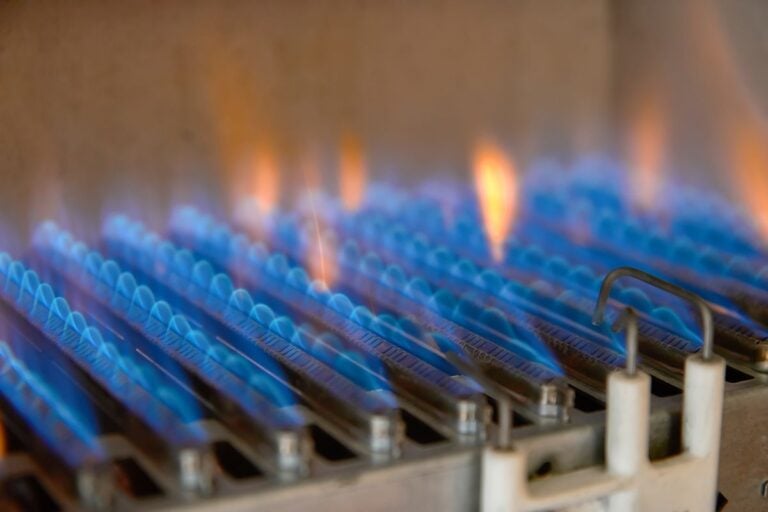
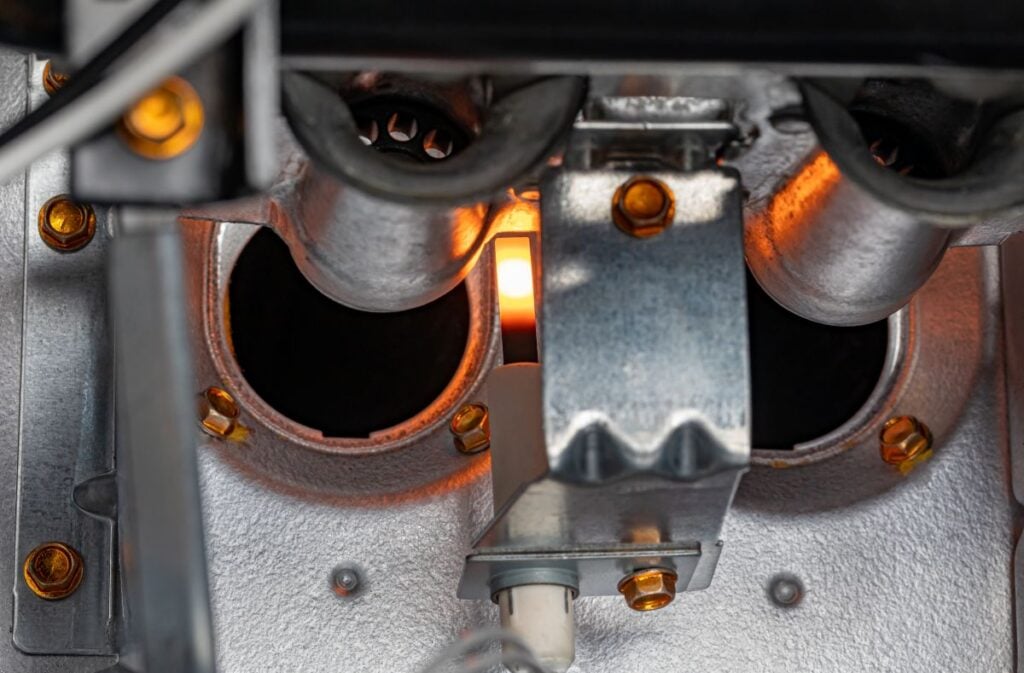
The burner is where fuel and air mix and ignite, creating the flames that generate your furnace’s heat. When the thermostat calls for heat, gas flows to the burners and the ignition system lights them, producing a row of steady blue flames. These flames heat the metal of the heat exchanger directly above them, which is the first step in warming your home. Burners can collect dust and debris over time, which disrupts the flame, so keeping them clean is part of routine maintenance. A yellow or flickering flame instead of crisp blue is a warning sign worth a professional look.
- Creates the heat: Burning gas produces the flames that warm the system.
- Needs clean operation: Dust on the burners disrupts the flame.
- Watch the flame: Yellow instead of blue signals a problem.
2. The Heat Exchanger
The heat exchanger is the most critical safety component in your furnace, transferring heat to your air while keeping toxic combustion gases separate from it. This metal chamber heats up from the burner flames, and the blower pushes your household air across its outer surface to warm it, all while containing carbon monoxide and other gases safely inside. That separation is the entire safety design of a furnace. If the heat exchanger cracks, dangerous combustion gases can leak into your home’s air, which is why a technician inspects it carefully during maintenance. A cracked heat exchanger is a serious hazard that requires immediate professional attention.
- Transfers the heat: Warms your air from the burner’s heat.
- Contains the gases: Keeps carbon monoxide out of your air.
- Inspect for cracks: A crack is a serious safety hazard.
3. The Blower Motor
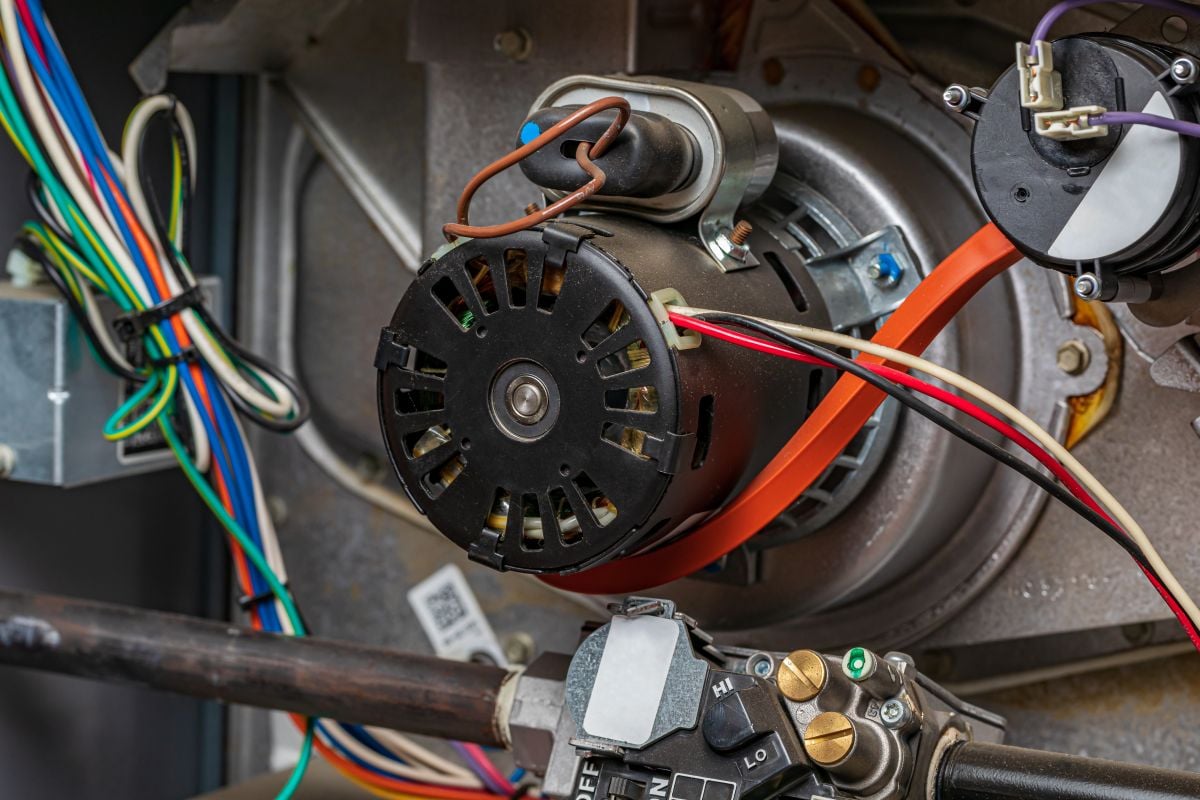
The blower motor drives the fan that circulates warm air throughout your home, making it the component you most often hear running. Once the heat exchanger is warm, the blower pushes household air across it and sends the heated air through your ductwork to every room, then pulls cooler air back through the returns. An air filter traps dust and debris before that air enters the furnace. The same blower often works with your air conditioner in summer, circulating cool air through the same ducts. Because it runs so much, the blower motor is a common wear item, and unusual noises, weak airflow, or a motor that will not start all point to a blower issue.
- Moves the air: Circulates warm air through your ducts.
- Works year-round: Often serves the air conditioner too.
- Watch for noise: Grinding or weak airflow signals wear, and filters typically need replacement every one to three months to maintain airflow.
4. The Thermostat
The thermostat is the control center of your furnace, sensing the temperature and signaling the system to start or stop a heating cycle. When the room drops below your set temperature, the thermostat tells the furnace to begin the heating sequence, and when the home reaches that temperature, it signals the system to shut off. Modern programmable and smart thermostats add scheduling and remote control, improving efficiency by matching heating to when you are actually home. Many no-heat problems trace back to a thermostat issue as simple as dead batteries or an incorrect setting, making it the first thing to check.
- Controls the cycle: Signals the furnace to start and stop.
- Enables efficiency: Smart models schedule heating around your day.
- Check it first: Dead batteries cause many no-heat calls.
5. The Flame Sensor and Ignition System
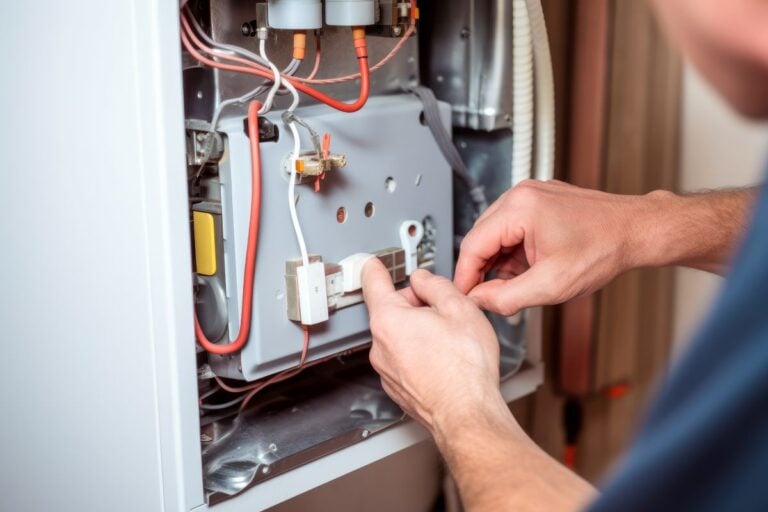
The ignition system and flame sensor work together to light the burner safely and confirm the flame is actually burning. Older furnaces use a standing pilot light, while modern units use electronic ignition, either a hot surface igniter or an intermittent spark, to light the gas. The flame sensor is a critical safety part that confirms a flame is present once the gas is flowing, and if it does not detect one, it shuts off the gas to prevent a dangerous buildup. A dirty flame sensor is one of the most common causes of a furnace that lights briefly then shuts down, and cleaning it is a routine repair.
- Lights the burner: Ignition starts the combustion process.
- Confirms the flame: The sensor verifies a flame is present.
- Common fault: A dirty sensor causes short, failed cycles.
Frequently Asked Questions
Homeowners learning about furnace parts ask these most often. Short answers follow.
What are the main parts of a furnace?
The main furnace parts are the burner, heat exchanger, blower motor, thermostat, and ignition system with flame sensor. These work in sequence to ignite fuel, transfer heat, and circulate warm air. Supporting parts include the gas valve, filter, and control board.
Which furnace part fails most often?
The flame sensor and igniter are among the most common failure points, often causing a furnace that lights briefly then shuts off. Blower motors and capacitors also wear out with heavy use. Many of these issues are caught early with annual maintenance.
What is the most important furnace part for safety?
The heat exchanger is the most critical safety component, because it keeps toxic combustion gases like carbon monoxide separated from the air you breathe. A cracked heat exchanger can leak carbon monoxide into your home. This is why professional inspection of the heat exchanger matters.
Can I replace furnace parts myself?
You can safely change the air filter and replace thermostat batteries, but any furnace replacement parts should match your exact model information before ordering. Parts involving gas, the heat exchanger, ignition, or internal electrical components require a licensed technician under Minnesota code. Attempting these repairs risks safety hazards and voided warranties. Suppliers such as Technical Hot & Cold carry genuine OEM parts in stock and ship orders placed before 3PM the same day, with OEM parts stocked for quick delivery from local warehouses so repairs can move quickly.
Know Your Furnace, and Know Who To Call
Understanding these five parts helps you describe a problem clearly, but diagnosing and repairing them safely is work for a trained technician, especially anything touching gas or the heat exchanger. Hoffman Cooling & Heating has worked on every part of Minnesota furnaces for 75 years, carrying Minnesota Mechanical Contractor Bond MB005011 and a 4.8 star average across roughly 2,300 Google reviews from Maplewood and across the Twin Cities. Whether it is a worn blower motor, a dirty flame sensor, or a heat exchanger that needs inspection, our technicians find the real issue and explain it in plain language, no jargon and no pressure. When a furnace part is acting up, reach out to Hoffman and we will get your heat running right again.